GPS tracker and microphone detection in vehicles: take back control of your movements (TSCM)

Groupe Hypérion intervenes with discretion, method and clear decisions when detecting microphones and cameras in a vehicle.

A vehicle is a particular point of vulnerability: it moves, it is parked, it is sometimes entrusted to others, and it can be accessed in just a few minutes. When someone seems to know your movements “too precisely”, doubt quickly sets in and changes your day-to-day life.

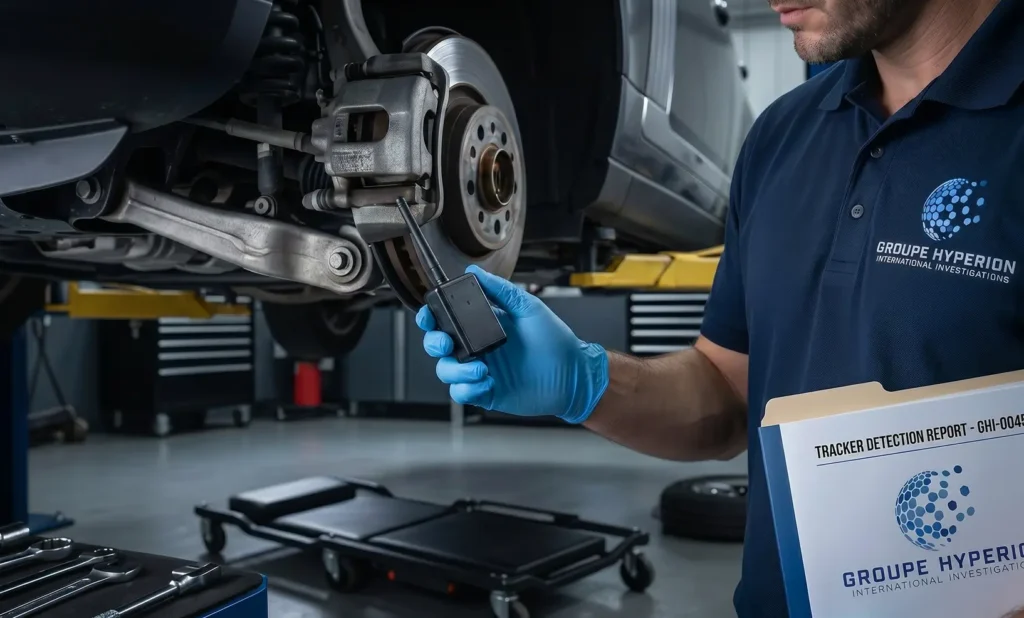
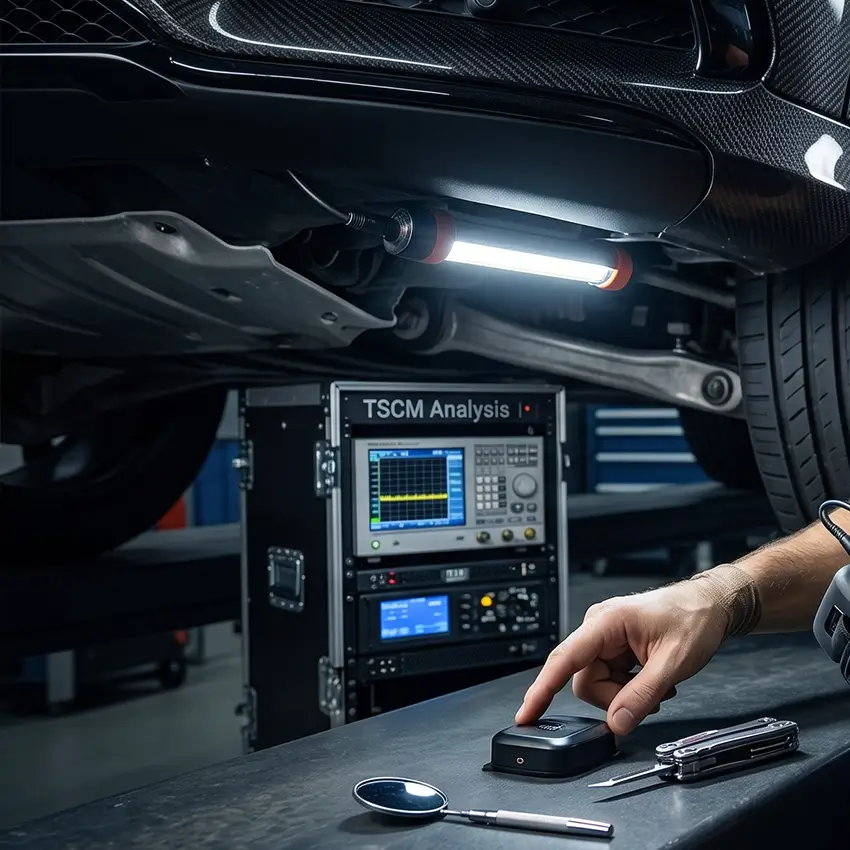
A vehicle detection intervention (TSCM counter-surveillance) aims to verify the absence of a tracker / geolocation beacon, as well as any onboard capture devices (microphone, recorder), within a realistic scope, using a sound method and with clear reporting.
In a hurry?

Go directly to our pages dedicated to detecting microphones and cameras, whether in a business, a local authority, at your home or in a second home.

I suspect a tracker on a vehicle

I want to secure a meeting room / executive office

See the page for detection in businesses.

I want detection at home

détection caméra espion et micro entreprise france hyperion

When is vehicle detection relevant?

Vehicle detection is often requested when:

  • someone knows your movements or your schedule with abnormal precision,
  • you feel you are being “expected” or “anticipated” repeatedly,
  • the vehicle has been entrusted (garage, car wash, loan) or has been parked for a long time in a high-risk context,
  • you discover an unusual accessory (mount, box, cable, charger) or a change that is hard to explain,
  • there is a sensitive context (separation, conflict, dispute, competition).

The goal is to avoid two pitfalls: improvisation and accusations without a solid basis.

détection caméra espion et micro entreprise france hyperion

What we look for on a vehicle

Depending on the context and the type of assignment, the search may involve:

check_circle
a tracker / geolocation beacon (tracking device),
check_circle
onboard capture devices (microphone, recorder),
check_circle
added or repurposed elements (“innocent” accessories, boxes, power supplies).

The key point here is not to “take everything apart”. The key point is to have a controlled, consistent and documented approach.

Why is a vehicle a special case?

check_circle
Quick access, quick installation

Unlike a home or an office, a vehicle can be approached and tampered with in a short time, especially when parked.

check_circle
Mobility = immediate impact

Vehicle tracking, if it exists, affects your freedom of movement: appointments, habits, personal safety. That is often what pushes people to act quickly.

check_circle
The risk of a “false good idea”

Taking it apart yourself, searching at random or throwing away a suspicious object can make you lose useful evidence and sometimes create a risk (safety, liability, mechanical fault).

spy camera and microphone detection company france hyperion

How an intervention is carried out

(6-step method)
01

Quick, factual scoping

We clarify:

  • the type of vehicle,
  • the context (suspicion, events, third-party access),
  • the signals observed (known movements, repeated coincidences),
  • your deadline (urgency or prevention),
  • the location and constraints (parking, access, confidentiality).
02

Securing and defining the scope

We define a realistic scope: what can be checked properly and without taking risks.

03

Structured visual inspection

Methodical checks of accessible areas consistent with opportunistic placement (without going into “how-to” details).
Objective: identify an addition, modification, non-compliant element, abnormal fastening, unusual accessory.

04

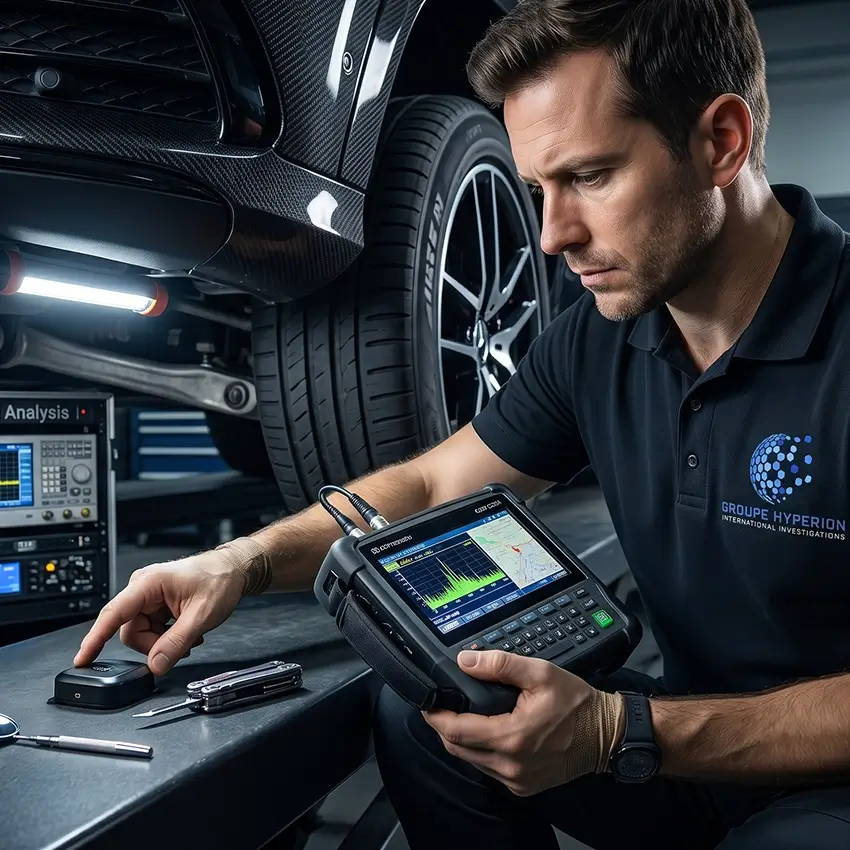
Technical checks adapted to the vehicle

Checks consistent with the context and the equipment present, without overpromising and without “showmanship”.

05

Targeted checks if something draws attention

When an element requires closer analysis, we go deeper in a controlled and cautious manner.

06

Summary + prevention recommendations

You leave with:

  • a clear summary (scope, findings, any limitations),
  • practical recommendations: access, parking, habits, simple precautions.

What you receive

(deliverable)
  • a clear report: scope checked, findings, points to watch, any limitations,
  • actionable recommendations: simple measures that genuinely reduce risk,
  • if needed: a combined inspection plan (vehicle + home or vehicle + offices).

Consider combining your detection checks; this is often done

Timeframes: what affects the duration

(and how to choose the right scope)

On a vehicle, the time mainly depends on:

    • the type of vehicle (city car, sedan, van, etc.),
    • the configuration and accessibility,
    • the context (simple suspicion vs corroborated signals),
    • and the logistics (inspection location, confidentiality, hours).

Advice from Groupe Hypérion, private detective:

if you have a deadline (appointment, important trip), say so from the start. We prioritise what is useful.

Best practices before your appointment

(very important)

Avoid “testing”

by abruptly changing your habits in an attempt to trap someone: it creates noise and little certainty.

A suspicious element?

Do not take it apart yourself; it is best not to touch anything.

Take a photo

If you have spotted an unusual object, (without handling it) note where and when you saw it.

Simply note

Recent third-party access, garage/car wash visits, high-risk parking.

FAQ – GPS tracker and microphone detection in vehicles

Sometimes yes, sometimes no. It depends on how it was installed, the type of device and accessibility. A random inspection often leads to false certainty.

No. Avoid multiple interventions (garage, car wash, dismantling) if you suspect a device: you risk losing useful evidence.

Depending on the area and logistics, it is often possible. The simplest thing is to specify your city, your availability and the urgency.

Yes, depending on the defined scope and the context (audio capture, recorder, added accessories).

No. Detection aims to verify a scope and secure it. Identifying who did it is a different process.

That is possible. The scoping (access, timeline, correlations) often helps sort through hypotheses without getting stuck.

Yes, this is common when the signals seem to affect several environments.
See the page for detection in houses and apartments.

Yes, especially when business travel is known or the stakes are strategic.

See our page for detection in businesses.

Do not dismantle, do not throw anything away, do not “tinker”. Simply document (photos, notes) and keep a history of access.

A short exchange: vehicle type, city, context, third-party access, urgency. We propose a clear plan.

Interventions
By city
(areas covered)

Groupe Hypérion operates in particular in the following areas.
Detection in Paris / Montpellier / Lyon / Bordeaux / Toulouse / Annemasse and Geneva

Request a vehicle scoping

Contact Groupe Hypérion for any information or a free quote.

Do you have serious doubts or an upcoming deadline (meeting, negotiation, conflict)?
Contact Groupe Hypérion for discreet assistance.

Fill out this field
Fill out this field
Fill out this field
Please enter a valid email address.
Select an option
Select an option
Fill out this field
Select an option
Fill out this field
You need to agree with the terms to proceed

Discover our articles on bug and camera detection

Call us